

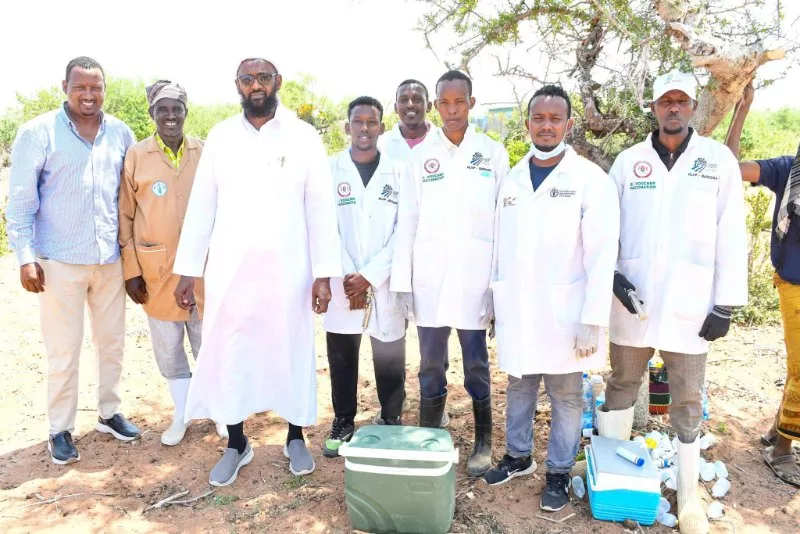
Garissa County has launched a major livestock vaccination campaign targeting 60,000 animals in Dadaab and surrounding communities to protect pastoral herds against disease outbreaks during the ongoing rainy season.
The exercise is being implemented by the County Department of Livestock and Veterinary Services in partnership with the Food and Agriculture Organization, with funding from the European Union under the Building Refugee Settlements in Kenya project.
The vaccination teams are operating in Dagahaley, Ifo and Hagadera refugee settlements, as well as neighbouring areas in Fafi, Jarajila, Labasigale, Damajale and Dadaab wards.
County officials say increased livestock movement following the onset of rains has heightened the risk of disease transmission, as animals converge around pasture and water sources.
Livestock Executive Milgo Dubow has urged livestock keepers in the targeted areas to take advantage of the free vaccination and veterinary services, saying the initiative will improve animal health, productivity and household incomes.
Chief Officer for Livestock Ahmed Shidiye said the programme brings together refugee and host communities under one coordinated animal health intervention, strengthening disease surveillance and protecting livelihoods.
Besides vaccination, veterinary teams will treat sick animals, conduct vector control, provide animal health education and monitor suspected disease outbreaks.
The exercise is also receiving support from 40 trained Community Disease Reporters, who are mobilising livestock keepers, directing them to vaccination centres and reporting suspected disease cases.
For pastoral households still recovering from previous drought seasons, the campaign comes at a critical time.
Livestock keeper Hussein Ahmed from Dadaab says the intervention will help reduce animal losses, protect household incomes and strengthen food security.
Livestock remains the backbone of Garissa County’s economy, supporting more than 80 per cent of the population and generating an estimated 10.5 billion shillings annually.
County officials say protecting animal health is essential to strengthening pastoral livelihoods and building resilience against future climate and economic shocks.