

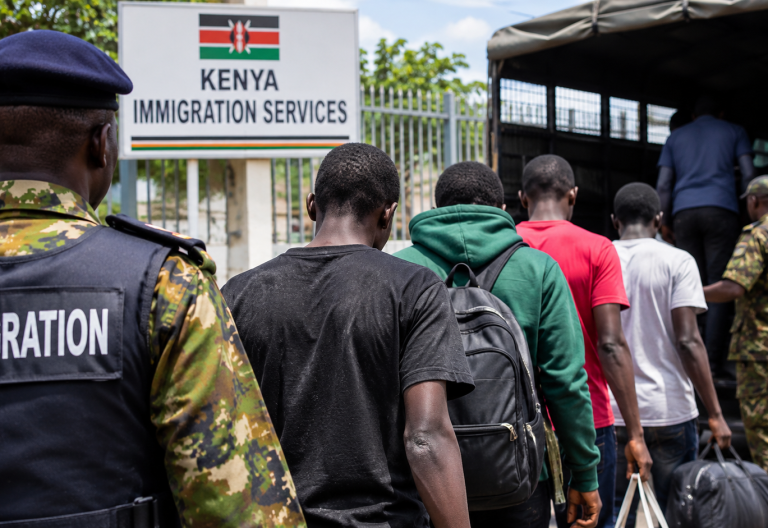
Kenya recorded a significant increase in arrests of undocumented foreign nationals during the 2025/2026 reporting period, with Nigerian nationals registering the sharpest percentage rise, according to the latest national security report.
The number of foreign nationals arrested for immigration-related offences increased from 953 in the previous reporting period to 1,048 between September 2025 and August 2026, representing a 10 per cent rise.
Nigerian nationals accounted for one of the most notable changes, with arrests increasing from three to 24 within a year, a sevenfold rise.
The figures are contained in the 2025/2026 Annual Report on the State of National Security, which also highlights increased arrests involving Eritrean, Somali and Tanzanian nationals, while cases involving Ethiopians declined.
Arrests of Eritrean nationals rose from 74 to 126, while Somali arrests increased from 90 to 156. Tanzania also recorded an increase, with arrests climbing from nine to 25 during the period under review.
Ethiopians continue to account for the highest number of arrests
Despite the rising figures involving several nationalities, Ethiopian nationals remained the largest group of undocumented foreigners arrested in Kenya.
The report shows that 592 Ethiopians were arrested during the latest period, accounting for more than half of all recorded arrests. The figure represents a decline from 670 arrests in the previous year, marking an 11.6 per cent decrease.
Arrests involving Burundian nationals also dropped from 69 to 50, while Egyptian nationals recorded a significant decline from 11 arrests to just one.
The government attributes the continued presence of undocumented migrants in the country partly to regional conflicts, political instability and economic difficulties, which have forced people to cross borders in search of safety and better opportunities.
It warns that illegal movement across the country’s entry points poses a security challenge, noting that uncontrolled cross-border movement can expose Kenya to security risks.
Government steps up border surveillance
Authorities say efforts are underway to strengthen border security and address organised activities linked to irregular migration.
Among the measures introduced is the establishment of the Counter Organised Immigration Crimes Unit within the National Police Service, aimed at tackling organised immigration offences.
The government has also expanded intelligence cooperation with neighbouring countries, strengthened engagement with diplomatic missions to establish the identities of foreign nationals and encouraged border communities to report suspected human trafficking and smuggling activities.
Enforcement agencies have continued to pursue the identification, arrest, prosecution and removal of individuals found in the country illegally, in accordance with Kenyan laws and international obligations.
However, the report acknowledges that gaps in border management remain a challenge despite ongoing interventions.
Arrest figures do not necessarily reflect migration trends
The changes in arrests across different nationalities have raised questions about the factors influencing immigration enforcement and movement across Kenya’s borders.
Although arrests involving Nigerian nationals increased by 700 per cent, the total number remained relatively low, rising from three to 24. The increase alone does not establish that the number of Nigerians entering Kenya illegally grew at the same rate.
Likewise, the decline in Ethiopian arrests cannot automatically be interpreted as a reduction in irregular migration from Ethiopia, as the report does not provide comparative figures on the number of people entering Kenya without valid immigration documents.
Arrest statistics may reflect enforcement operations, changes in border monitoring, migration routes or other factors, but the report does not establish which factors contributed to the recorded changes.
Kenya plans further reforms to immigration management
The government says it intends to invest in modern border surveillance technology, strengthen cooperation with regional partners and improve the handling of asylum applications and immigration cases.
Plans are also underway to review existing immigration, asylum and border management policies to ensure they respond to emerging challenges.
While the report offers a breakdown of arrests by nationality, it provides limited details on where the arrests occurred, the circumstances surrounding them, the routes used by migrants or the outcomes of the cases.
Further information from immigration authorities and the National Police Service could help clarify the reasons behind the changing arrest figures.
For now, the latest statistics offer insight into Kenya’s immigration enforcement efforts but do not provide a comprehensive measure of irregular migration into or within the country.