

The Media Council of Kenya (MCK) is reviewing its risk management systems to strengthen institutional accountability, improve decision-making and ensure its operations remain aligned with its long-term strategic objectives.
The review was undertaken during a working retreat involving the Council’s Board, Management and risk champions, where participants examined the institution’s corporate risk register and Enterprise Risk Management (ERM) framework against its 2026–2030 Strategic Plan and emerging operational challenges.
The exercise focused on integrating risk management into the Council’s day-to-day activities, including departmental planning, budgeting, performance monitoring and decision-making, rather than treating it as an administrative or compliance requirement.
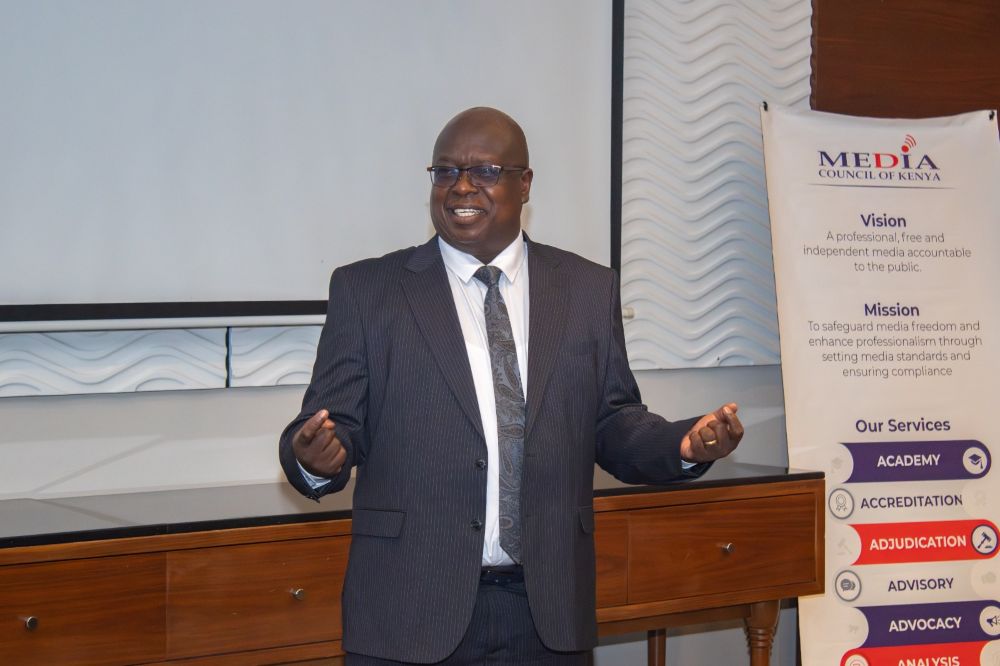
MCK Board Chairman Maina Muiruri said the retreat provided an opportunity for Board members and Management to develop a shared understanding of institutional risks and how they should be addressed.
He emphasised the importance of consistency in identifying risks, determining acceptable levels of exposure and developing appropriate mitigation measures, noting that a common approach would strengthen the Board’s oversight role.
Mr Muiruri observed that risk management should extend across all institutional functions, including the work of Board committees, and not be confined to financial or legal concerns.
He urged committees to incorporate risk assessments into their deliberations and reports, noting that although the practice was already expected, there was a need to strengthen its implementation.
MCK Chief Executive Officer David Omwoyo Omwoyo, MBS, encouraged participants to approach the exercise with a willingness to learn and translate the discussions into practical decisions within their respective departments.
He challenged them to consider potential risks to departmental targets, timelines, resources and budgets, stressing the need to ensure that institutional priorities were pursued with a clear understanding of possible challenges.
The retreat was facilitated by Sam Kibaara of Pinebridge Training and Consulting Ltd, who said the review was intended to embed risk management within the Council’s planning and operational processes.
Mr Kibaara said the process had been guided by the institution’s new strategic direction, adding that risks should be identified in relation to the Council’s objectives and priorities.
He noted that the Risk Management Steering Committee and risk champions had undertaken a three-day review of the corporate risk register, organising identified risks around the Council’s four key result areas.
The team also assessed the suitability of the existing 2019 Risk Rating Matrix and Enterprise Risk Management Framework, examining whether they remained adequate in addressing the institution’s evolving operating environment.
The review further emphasised the need for departments to incorporate risk mitigation measures into their work plans and budgets, with specific timelines and accountability structures to support implementation.
Among the key outcomes expected from the exercise are the development of risk appetite statements, clearly defined tolerance levels, key risk indicators and an implementation roadmap to guide the Council’s risk management processes.
The revised framework is expected to strengthen institutional oversight, improve the monitoring of emerging risks and ensure that resources, operational decisions and strategic objectives remain aligned with MCK’s mandate.