
The State Department for Arid and Semi-Arid Lands (ASALs) and Regional Development has asked Parliament for additional funding to support drought mitigation, water development, livestock programmes and livelihood interventions in areas facing persistent climate-related challenges.
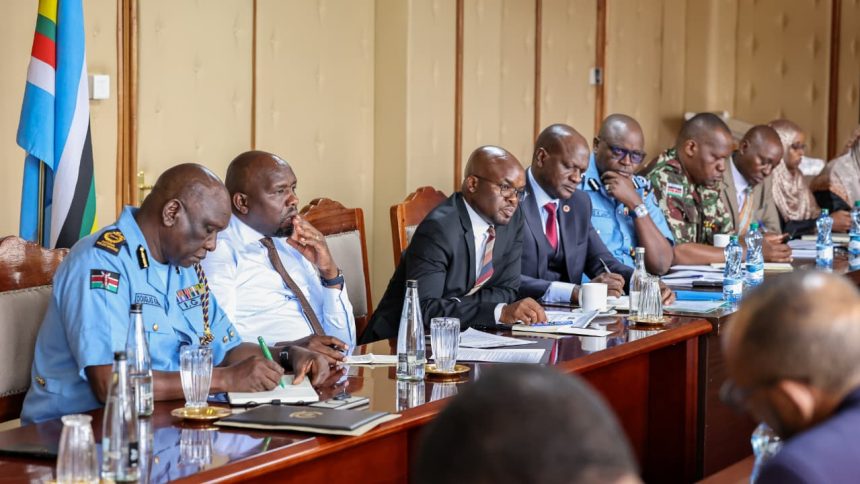
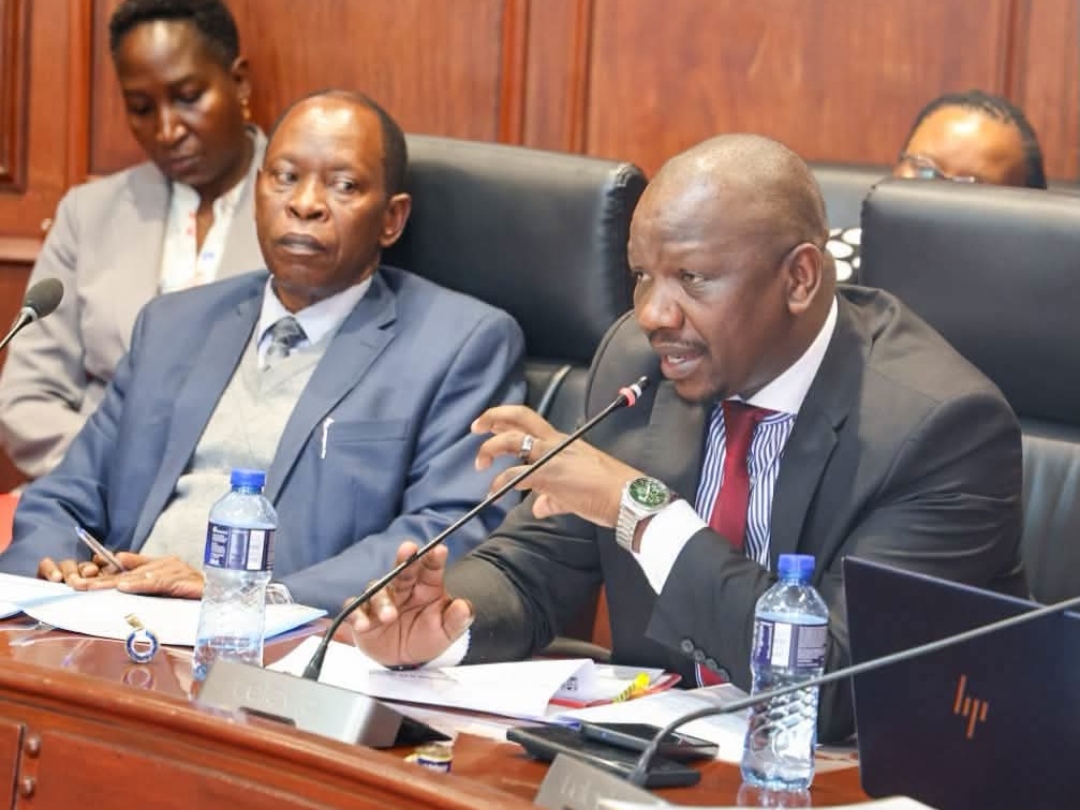
The department, led by Principal Secretary Dr Caroline W. Karungu, presented its funding requirements before the National Assembly’s Departmental Committee on Regional Development on Tuesday, November 24, 2026, as part of the ongoing preparations for the 2027/2028 financial year budget.
During the session at Bunge Tower, the department disclosed that its proposed budget was facing a shortfall of Sh12.84 billion, warning that limited resources could affect the implementation of planned programmes across arid and semi-arid regions.
The funding appeal comes amid continued challenges facing ASAL communities, including prolonged drought, unreliable water supplies, food insecurity, climate change and declining livestock productivity, which have disrupted livelihoods and increased the vulnerability of pastoral households.
The department said additional resources were necessary to strengthen water infrastructure, support livestock production, expand irrigation initiatives and improve the resilience of communities whose livelihoods depend heavily on natural resources.
Among the programmes highlighted was the Northern Kenya Integrated Camel Development Programme, which seeks to strengthen the camel value chain through the establishment of milk processing facilities and collection centres.
The initiative is expected to improve market access for pastoralists, minimise losses associated with milk production and create opportunities for income generation through commercialisation of camel products.
Appearing before MPs, Karungu appealed for additional allocations to enable the department to implement its planned activities and meet development targets in regions that continue to face economic and environmental challenges.
She told the committee that increased investment was necessary to support communities affected by recurrent drought and improve their ability to withstand future shocks.
The proposed funding is also expected to support broader regional development interventions aimed at addressing disparities in infrastructure, economic opportunities and access to essential services in underserved areas.
The department’s budget proposals will now be considered by the committee as Parliament continues reviewing funding priorities for the 2027/2028 financial year.
The deliberations are expected to determine the resources available for ASAL development programmes, including water projects, livestock support, climate resilience and initiatives aimed at improving livelihoods in vulnerable communities.
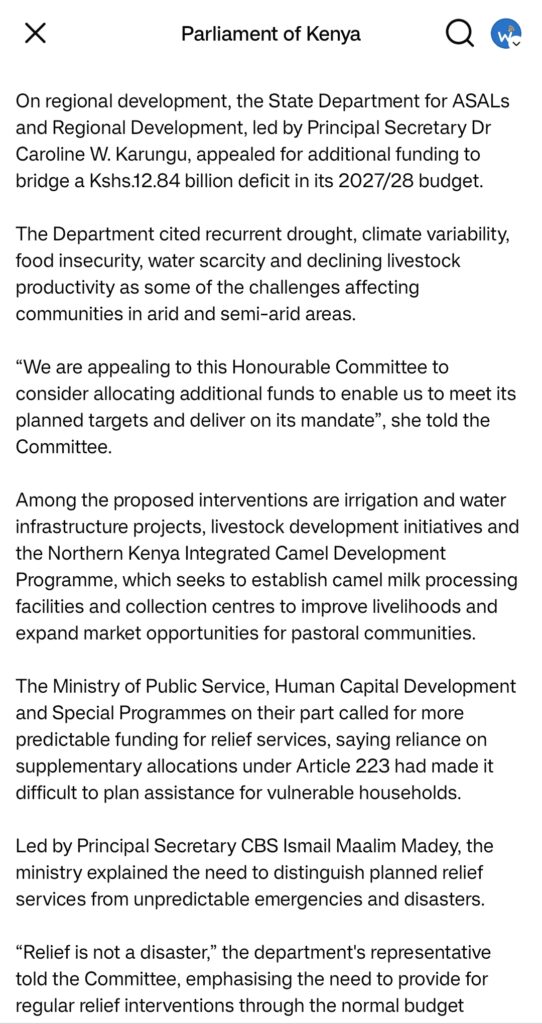
Part of the statement by the Parliament of Kenya on Tuesday, November 25, 2026. PHOTO/Screengrab by waryahe media /https://www.facebook.com/ParliamentKE